

Acid Dye
SEO:
Acid Dye
Classification:
Product Details
Acid Dye
Acid Dye is a dye that is typically applied to a textile at low pH. They are mainly used to dye wool, not cotton fabrics. Some acid dyes are used as food colorants, and some can be used to stain organelles for medical microscopy.
Acid dyes are anionic, soluble in water and are essentially applied from acidic bath. They possess acidic groups, such as SO3H and COOH and are applied on wool, silk and nylon when an ionic bond is established between a protonated –NH2 group of the fibre and acid group of the dye. Overall wash fastness is poor, although lightfastness is quite good. As dye and fibre contain opposite electrical natures, strike rate and uptake of acid dye on these fibres is faster; electrolyte at higher concentration is added to retard dye uptake and to form levelled shades. Acid generates cations on fibre and temperature helps to substitute the negative part of the acid with anionic dye molecules.
Description
Acid dyes are generally divided into three classes according to their fastness requirements, migration ability, and dyeing pH.
Acid dyes affix to fibers by hydrogen bonding, Van der Waals forces and ionic bonding. While some acid dyes work in water, many choose to activate dyes in acid dye-baths instead. According to the Brønsted–Lowry acid–base theory, an acid is a molecule or ion capable of donating a proton, and this is determined by the acid dissociation constant. Compared to most acids, water has a much higher pKa value, meaning that it dissociates to give H+ with more difficulty. In this context, if an acid is used instead of water, then the hydrogen ion (H+) is more easily able to dissociate in order to react with the aniline dye anion, allowing the dye to dissolve.
Animal protein fibers and the synthetic fiber nylon contain many cationic sites that bind anionic dye. The strength (fastness) of this bond reflects the strength of this ionic interaction.
Fibers
In the laboratory, home, or art studio, the acid used in the dye-bath is often vinegar (acetic acid) or citric acid. The uptake rate of the dye is controlled with the use of sodium chloride. In textiles, acid dyes are effective on protein fibers, i.e. animal hair fibers like wool, alpaca, and mohair. They are also effective on silk. They are effective in dyeing the synthetic fiber nylon, but of minimum interest in dyeing any other synthetic fibers.
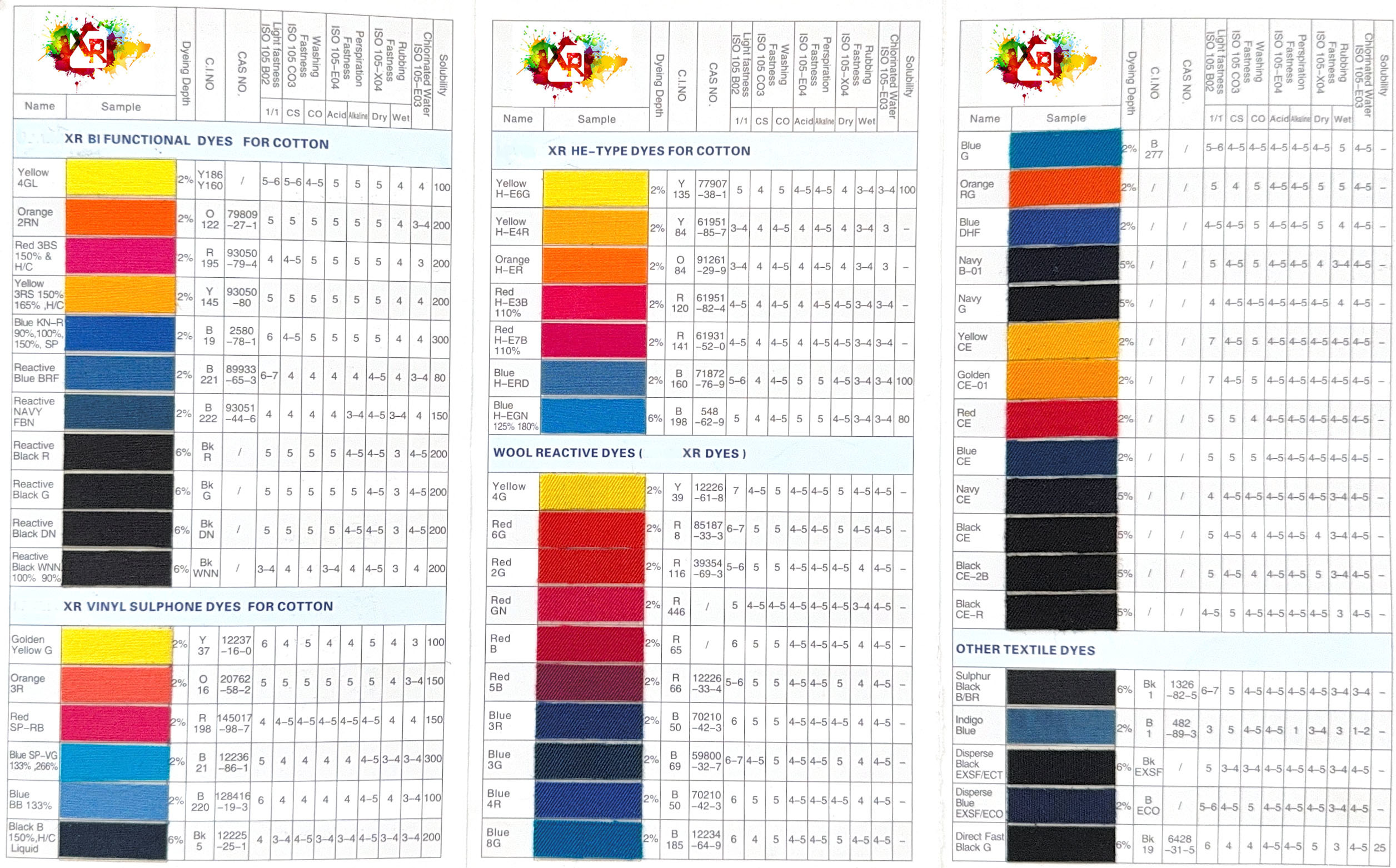
We especially offer following Acid Dye:

Previous:
Next:
Related Products


Consult Immediately
We will contact you within one working day. Please pay attention to your email.